DOWN WITH THE PAX SILICA!
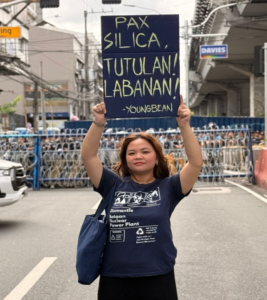
Posadists Today publish this document from the North American organization World Beyond War to express solidarity with its campaign to close U.S. military bases in the United States, Europe, the United Kingdom, and around the world. World Beyond War regularly participates in British anti-war campaigns, particularly those led by the Menwith Hill Accountability Campaign (MHAC). The document we are presenting, entitled « Down with Pax Silica! » – sometimes called Silicana – is part of these international campaigns, which involve the national CND, Bradford CND, the Menwith Hill Accountability Campaign (MHAC), StopTheWar and others. Numerous British and international feminist movements also take part, as does the British social justice union ACORN. Since local trade union branches across the country support anti-war initiatives all the year-round, major trade unions such as UNITE, ASLEF, CWU and TSSA are indirectly present in all the major national actions organized with MHAC’s collaboration —even though MHAC is a North American organization. Menwith Hill is a British base in Yorkshire. However, it serves NASA exclusively, which has established there its world’s largest electronic espionage and surveillance center outside the United States. Protesters, who often gather in large numbers outside this base, denounce the violation of national sovereignty that it represents, and its complete lack of accountability to its host country. Indeed, this base on British soil operates without any British legislative or judicial oversight. The base commander is an unnamed North American civilian who answers to no British authorities—whether parliamentary or local. Protesters and their organizations condemn the deadly role played by this base in deadly « Anglo-American » proxy wars—involving killer drones and remote operations—a role that is never questioned in public or in the British press. When protesting at Menwith Hill, demonstrators reject the base’s function as the global « Five Eyes » hub for monitoring, intercepting, and weaponizing the information flowing through telephones, satellites, and international communication networks. Capitalism knows that it can no longer meet human need, and has lost the support of society. It can no longer manage production without assaulting life itself and the planet. It senses that it has lost control over the world’s future. Its terrifying weapons and its genocidal wars demonstrate that violence is the only means it has left to try and keep its regime afloat. Faced with the new world war of capitalism against all countries and populations that defy its savagery, humanity moves towards solidarity and unity. This is how the North American MHAC and British anti-war organizations periodically gather at Menwith Hill. Under imperialist pressure from the Trump administration, Ferdinand Marcos Jr. of the Philippines signed an agreement allowing the US to establish massive economic zones in the country (many of these Freeports). These zones are intended for manufacturing the semiconductors that the US no longer wishes to purchase from China, as part of its war strategy to ostracize and attack China. On September 1 of this year in Manila, over 50 civic, environmental, scientific, and indigenous organizations formed a coalition against « Pax Silica » (sometimes referred to as « Pax Silicana »). For their Filipino leader, Teddy Casino, Pax Silica is not merely an investment program; it represents « a takeover of the country’s resources, technology, and infrastructure ». Significant—and heavily suppressed—protests have recently taken place in Bonifacio Global City, Quezon City, Angeles City, Pampanga, and elsewhere, as well as at the US Embassy in Manila, under the slogan « Shut down the Pax! ». Just one of the new facilities in New Clark City is set to span 16 square kilometers and displace thousands of people from the indigenous Aeta community. US officials acknowledge that artificial intelligence (AI) will play a role in the semiconductor production operations. For them, this US-initiated project in the Philippines takes no account of the vast amounts of water and electricity it will require. According to the Manila Times, the Marcos Jr. government’s insistence on the project, coupled with growing public opposition, is turning parts of the country into « a battleground in the ‘tech war’ between the US and China ».[1] 21.9.26 – Posadiststoday.org REJECT PAX SILICANA! From WORLDBEYONDWAR.ORG Jhay de Jesus, August 10, 2026 Pax Silica will not only exploit the Philippines’ natural resources and workforce, but it will also drag the country further into a role that serves ongoing U.S. military aggression and war. By Jhay de Jesus, World BEYOND War Asia Organizer. https://worldbeyondwar.org/pax-silica-the-philippines-role-in-propping-up-u-s-militarism-and-war/ Resist! Fight! Pax Non-Bellum! Pax Silica will not only exploit the Philippines’ natural resources and workforce, but it will also drag the country further into a role that serves ongoing U.S. military aggression and war. The Filipino people must reject Pax Silica and call on the Philippine government to end all agreements between the U.S. and the Philippines. Pax Silica is a U.S.-led coalition launched in December 2025 as the U.S. Department of State’s flagship effort on artificial intelligence (AI) and supply chain security. This economic partnershipbetween the U.S. and its allies will facilitate supply chains for mineral mining, semiconductor manufacturing, the creation of energy-intensive AI data centers, and surveillance technology infrastructure[2]. Currently, there are 24 member states to Pax Silica. Israel is among the founding members alongside the U.S., Australia, Japan, South Korea, Singapore, and the United Kingdom. Taiwan is a non-signatory but has endorsed the declaration’s principles via the Joint Statement on the Pax Silica Declaration and U.S.-Taiwan Economic Security Cooperation. The Philippines entered the coalition in April 2026. As part of its entry into the coalition, the Philippine government is leasing around 4,000 acres (1,600 hectares) of land in New Clark City, Tarlac, Central Luzon. As part of the broader Luzon Economic Corridor, this lease is intended to last up to 99 years. This Economic Security Zone will serve as a site for high-tech industries and supporting businesses, functioning as a supply chain hub for artificial intelligence (AI) technology. The formal binding agreement is set to be signed in November 2026. Various sectors are raising critical concerns about this project. One major issue is the strain on electricity and water supplies. Because data centers run 24/7, they require vast amounts of power and water. An estimated 3,000 megawatts are needed
CAPITALISM MILITARISES SOCIETY IN HOPE TO HALT SOCIAL TRANSFORMATION
In the UK, companies like Ford and General Dynamics are adapting their commercial lines to the production of militarised variants of the Ford Ranger. Heavy engineering commercial firms like Sheffield Forgemasters and Alloyed have partnered to produce Howitzers artillery systems and high-speed jet engines for military drones. The Ministry of Defence announced that the Burnham government “is funnelling £298 billions of State money (over 4 years) into the UK Defence Investment Plan to help private UK defence firms build factories, hire workers, secure international buyers and attract outside investment”. [1] When he was elected in 2024, Keir Starmer promised to return the UK to ‘economic growth’ by combining his Green Prosperity Plan with his Strategic Defence Review(SDR). Introduced by him in early 2025, the SDR represented a “reform of the defence industry to secure the country against Russian aggression and internal economic stagnation”. In June 2026 – the Starmer government injected new funding to start implementing “defence readiness” in the army, the air force and the navy – together with plans to raise defence spending to 2.5% of GDP by 2027. This strategy aimed at “boosting jobs”, with a further £250m State fund invested in five branches of the economy.[2] When Starmer was Prime Minister (PM) from July 2024 to July 2026, his Strategic Defence Review plan (SDR) aimed at guaranteeing national security and economicsecurity at the same time. According to this, building a strong army and drone-manufacturing centres were not just for ‘defence’, but “to energise the economy”. Now that Starmer has stepped down, the new Labour PM, Andy Burnham retakes the same path with even greater force. Burnham sought popularity through oblique criticisms of militarism and a commitment to Net Zero (emissions) by 2050. Shortly before he resigned, Starmer found that he could not finance both his Green Prosperity Plan with his Strategic Defence Review. He would have to cut social welfare for the sake of warfare. When the Hormuz Strait was closed, Starmer’s Chancellor Rachel Reeves faced new levels of inflation and huge increases in the cost of long-term government borrowing. Pressed by Nato, the Starmer government decided nonetheless to commit an extra £15b for the army. Improvements to the navy and the manufacture of autonomous drones became priorities – but there was never enough money for the military. Government departments stopped working together. On 11 June 2026, the Starmer’s Defence Secretary (John Healey) and the Armed Forces Minister (AL Carns) both resigned. They said that the country was now “in danger” and that “a stronger national deterrence against Russian expansionism” was wanted. Andy Burnham – then still Mayor of Manchester – accused Starmer of having cancelled important social projects “to pay for the Whitehall military wrangling”. The 2019 Amended Climate Change Act commits all UK governments to achieving ‘net zero’ greenhouse gas emissions by 2050. This is very firmly defended by Ed Miliband who served under Starmer, and is now serving under Burnham. With his Green credentials, Miliband has support in a generally progressive layer of the left in the Labour Party and Trade Unions. He gets support also from the British bourgeois commercial sector that trades for billions with China. The resignation of Starmer was wished for by an important faction of the Labour bureaucrats, and by Labour imperialists in the arms industry. Many of them want a return to big oil drilling in the North Sea. They forced Miliband to accept some of this, but he has support of his own in trade unions like Unison (Public Sector), the teachers and others. The mass of the working class welcomes his “Green Prosperity Plan” because it is socially useful and requires workers. Starmer did not resign. He was pushed by all sides, the left included Starmer was publicly humiliated and hounded by the US and UK top army generals who wanted an immediate increase in Nato’s funding, and the swift preparation of the British armed forces to “war-fighting readiness”. [3] Meanwhile, US, UK and international financiers were demanding from Starmer that he should align with Donald Trump’s view that China is a “primary systemic and economic threat”. [4] Since Tony Blair, the leadership of what used to be centrist Labour tendencies has steadily moved rightwards. It prosecutes and persecutes the pro-Palestinians. It endorses Nato’s demands for ‘war readiness’ and supports the industrial rearming in the UK. As a group, Keir Starmer, Angela Rayner, Yvette Cooper, John Healey, David Lammy, Wes Streeting and even Ed Miliband have kept reiterating their “ironclad support for Ukrainian sovereignty, territorial integrity and resisting Russian aggression”. Even before he became PM in July 2026, Andy Burnham was a firm supporter of Ukraine against Russia. Since he became PM, his government signed an AI partnership with Ukraine, and agreed with it a plan to mass produce the UK Stone Cloak electronic warfare system to disable Russian air defences. The Burnham administration has recently allowed the European MBDA arms manufacturer to use British classified blueprints and technical data for the manufacture of long-range cruise missiles in local Ukrainian and French assembly lines. Russia justly riposted that it now feels entitled to target British soil. When Nato was piling up demands on Starmer, he did not find support in his group of ministers. There, many agreed with the army’s demands, whilst others sought to guard their departments against financial cuts. In front of the resistance (to cuts) on the part of trade unions like UCU, and left Labour sectors like John McDonnell, Richard Burgon, David Taylor – and even Andy Burnham, the Starmer leadership simply gave up. This crisis continues now. The 158th Trade Unions Congress (TUC) was held on 13th Sept. It reiterated its support for the UCU-led “Wages not Weapons” motion passed by its own TUC Congress last year. The adoption of this motion reversed the TUC previous stance in support of more money for the army. In sectors of the Labour left, in the trade union bases and in large swathes of the petit bourgeoisie, Starmer’s was widely repudiated
RUSSIA IS NOT OUR ENEMY
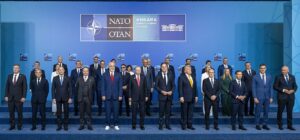
This article was published in the Belgian ALERTE OTAN n° 99, quarterly Bulletin of the Committee Surveillance Otan (CSO) – for the 2nd quarter of 2026. ”Four years after it began, the Russian « Special Military Operation » (SMO) in Ukraine of February 2022 is still designated « invasion » or « unprovoked war of aggression »—terms used by our media and governments, as well as by many peace movement groups and self-described left-wing parties. The CSO always defined the war in Ukraine as « the war of Nato, against Russia, on Ukrainian soil » – a war caused by the increasingly bellicose expansionism of NATO. This CSO stance drew fierce opposition inside the peace movement, and even ostracism. Any mention of Russia had to be accompanied by the standard refrain: « it’s Putin’s fault. » However, a change of perspective has started to emerge. Major demonstrations have taken place in Belgium against the « Arizona government » [of the prime minister Bart De Wever, leader of the Flemish nationalist New Flemish Alliance (N-VA) party. It is a tradition in Belgium to name governments after color combinations. The flag of the South-West Arizona State in the USA displays the 5 colours that happen to be those of the 5 parties of the prime minister coalition. Yellow N-VA, Red (Vooruit), Blue (MR) & Orange (CD&V). Editor’s note]. The ‘Arizona government’ has launched brutal attacks on the social rights of the population. There are now growing calls to oppose this government’s arms-buildup. These calls multiply as they get taken up. Voices are now being raised to say that “it is NATO encircling Russia in Ukraine, and not the other way round. » NATO is being increasingly seen for what it is: the war machine of the 32 members States of the Atlantic Alliance’. Although these 32 nations compete fiercely between themselves, they all agree to keep their hegemony over the rest of the world. Trump’s two US presidencies have pushed war frenzy to new extremes. At the 2017 NATO summit in Brussels, Trump threatened to withdraw from the Nato Alliance unless member States committed to spending 2% of their GDP on military capabilities to counter Russia. For the year 2026—now under Trump’s second term—they committed to 5% of GDP for between 2030-35. The NATO meetings focus heavily on the need for more cohesion between troops and military capabilities for war against Russia. The upcoming NATO summit in July 2026 is already signaling further measures in this direction. Conclusions for Belgium: The new military spending hike of the « Arizona » government is a carbon copy of NATO’s demands. Through this program, Belgium is directly participating in NATO’s expansionism in general, and specifically in NATO’s war in Ukraine against Russia. The next NATO summit will devote a significant portion of its agenda to organizing the « division of labor » among the members, to continue the war in Ukraine. No room is being left for diplomacy or peace negotiations. War propaganda against Russia continues, along with the shameless lies that accompany it. By now, expressing even the slightest reservation about this war has become an offence. It is high time we stopped viewing Russia as our enemy! Alerte Otan 99 – https://csotan.org/ao/article.php?ao_id=99&art_id=0 https://www.csotan.org/ao/ao.php La Russie n’est pas notre ennemie! Feature image: Nato Summit Ankara, 7-8 July 2026. &.&.&.&.&.&.& Additional: Read: The Militarisation of the World, In the German-Foreign-Policy.com – with the sub-title: A Berlin-Brussels Exclusive Report, 28.4.2026 https://www.german-foreign-policy.com/fr/news/detail/10381

THE WORLD NEEDS A LIVING LEFT
We publish this reflection by Vijay Prashad, Indian historian and journalist, CEO of the Tricontinental: Institute for Social Research, which he presented at a left-wing conference held at the end of May 2026 in South Africa. The analysis he makes of the situation in South Africa and India, but also at the global level, seems very interesting to us, posing the need for the organization of the left-wing forces and the working class for the survival of humanity. While a declining imperialist system struggles to preserve its order, the organization of the working class becomes not only necessary for the oppressed of the world, but essential to human survival. Dear friends, Greetings from Tricontinental: Social Research Institute. From May 29 to 31, the forces of the South African left gathered in Johannesburg, South Africa, for the Left Conference. It is important to understand the context of this meeting. More than thirty years after the official end of apartheid, the South African population is still struggling to meet their basic needs, with an official unemployment rate of 32.7% and 43.7% including workers in situations of discouragement – those who are available to work but no longer looking for employment. Meanwhile, the country’s wealth is being exploited by multinationals. The inability to resolve these imbalances in the creation and distribution of wealth has led to the fragmentation of the African National Congress (ANC), once the main vector of the national liberation struggle, and to its transformation into a party of the rich. At the same time, the forces of the left are demoralized, while the right, including the former oligarchy of apartheid, acts without being controlled. It was at this time that the Communist Party of South Africa (SACP) and the organizing committee of the conference brought together various political forces, many of which were separate formations of the ANC, to discuss urgent strategic issues for South Africa and other countries facing similar crises. During a plenary session on the current situation, I spoke on behalf of our institute. The following reflections were extracted from this presentation. Workers halted rail transport in various places across Tripura State. Photo CPI(M) When we fight, we win. If we were too afraid of failing, we would do nothing. Today, May 30, marks the 56th anniversary of the founding of the Central Indian Unions (CITU), a federation representing more than seven million workers. On February 12, 2026, the CITU joined other trade unions and agricultural organizations in a general strike against the new labor laws, which weaken workers’ rights to collective bargaining, encourage contracting and pave the way for longer working hours. It is estimated that about 300 million workers, farmers and other segments of the working class participated in strikes and mass mobilizations across the country. Indian workers continue to struggle in difficult conditions, following in the footsteps of the historic farmers’ uprising of 2020–2021, when hundreds of thousands of farmers organized a one-year demonstration, attracting the support of hundreds of millions of workers and farmers across the country and forcing the government to repeal its anti-farmer laws. When we fight, we win. And even when we don’t reach our goals immediately, we gain confidence and experience for the next battle. We are supported by more than a century of struggles of the organized working class, peasants and for national liberation. These struggles were expressed during the Paris Commune (1871), the October Revolution (1917), the Vietnamese Revolution (1945), the Chinese Revolution (1949), the Cuban Revolution (1959), and a series of anti-colonial victories, including the remarkable and little-understood events that take place in the Sahel. A discussion on the left does not necessarily have to start with a feeling of despair. The working class and the peasantry should be proud of the key role they play in these struggles and in their attempt to overcome capitalism and build a socialist society. Since the 2008 financial crisis, the global economy has experienced slow growth, high levels of debt, declining productive investment and profound social inequality. The sharpest declines have occurred in the North Atlantic economies, which continue to suffer from what we call the Third Great Depression. The United States and its allies have not succeeded in solving these economic problems or proposing a credible social project. As their grip on finance, technology and natural resources weakened, decadent and dangerous elites tightened their grip on information and intensified war conflicts to maintain their world order. This is the phase of hyper-imperialism. The evidence of these hyper-imperialist attacks is clear: China, Cuba, Iran, Lebanon, Palestine, Venezuela and Yemen are all targets. This dynamic is intensified by the New Cold War, in which the United States sought to contain the rise of China, in particular, and the transfer of the center of gravity to Asia in general. These events clearly show that the central contradiction of our time lies between a declining imperialist system that seeks to preserve its domination and the aspirations of peoples and nations seeking sovereignty, development and social justice. However, the weakening of imperialist power does not automatically lead to liberation. The story does not offer any automatic transition or guaranteed victory. The fragmentation of the old order creates opportunities, but also dangers: rivalry between capitalists, regional wars, harmful political ideologies and intensification of the extraction of wealth from the global South to the North. That is why the decisive question for humanity is the organization. Will the working classes and oppressed peoples be able to build enough organized power to intervene independently in this crisis? This is the main challenge of our time. Here, we must speak frankly of the very crisis of the left. In many countries, communist and labor movements suffered historic defeats during the neoliberal offensive of the late 20th century. The unions were weakening. The political formation has declined. The electoral conflict has replaced mass mobilization. NGOs have replaced popular structures. Over the past forty years, historic national liberation parties (such as the Indian National Congress and the ANC) and Social Democratic parties have exhausted their missions — they no longer defend the fundamental principles of social welfare. These parties no longer believe in redistribution and
SOLIDARITY WITH THE CUBAN GOVERNMENT AND PEOPLE
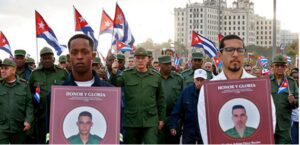
The desperate attack of US imperialism against the Bolivarian Republic of Venezuela extends to the Cuban workers’ state. This shows that it is not a simple offensive of looting resources, but of structural or ideological class violence against all who represent social justice, equality and sovereignty. Since Gaza, Venezuela, Iran and Cuba it is evident that the system-vsystem attack, on the verge of a world war, is aggravated. The immediate reaction of President Miguel Diaz-Canel of solidarity with Venezuela against the US attack, and the tribute to the 32 Cuban heroes fallen in combat, demonstrate the level of awareness and political decision of the people and the Cuban leadership left by Fidel: « Peoples of America, we have to close lines! » « The people of Cuba are not anti-imperialist by manual; imperialism made us anti-imperialists. But not only Cuba. The world will be increasingly anti-imperialist from this attack on all international norms, this offense to intelligence and human dignity, this act of criminal arrogance with which a sovereign state was attacked by an empire that despises the rest of the nations, » said Diaz-Canel. « Here we are, not one, but millions of continuers of the work of Fidel, Raúl and his heroic generation. They would have to kidnap millions of us or disappear with us from the map and, yet, the ghost of this small archipelago that they had to spray for not being able to submit it would haunt them forever, » he said, while from all corners applause and the screams of « Homeland or death! » multiplied. « No, imperialist gentlemen: we have absolutely no fear and, as Fidel said, we don’t like being threatened; you won’t intimidate us « They not only defended the sovereignty of Venezuela, President Nicolás Maduro and his wife Cilia Flores; they defended the human dignity, peace, honor of Cuba and our America. They were the sword and shield of our peoples in the face of the advance of fascism and will forever be a symbol, a proof that there are no small people when their dignity is so firm. Thank you for the courage and the example, comrades. » After occupation and attacks in the Caribbean Sea, followed by bombing and kidnapping of President Maduro and Cília Flores, Cuba became a target. Trump said that no more drops of Venezuelan oil would reach the Island. Venezuela had been Cuba’s largest energy partner and political ally. On January 29, Trump signed an import tariff decree against any country that dares to send or sell oil to Cuba. Situation of Cuba As said by Friar Betto, such interference from the US is « a way to exacerbate the economic, commercial and financial blockade of more than 60 years ». The blockade has been a counterrevolutionary decision of imperialism against Cuba, an example of dignity and resistance. What keeps it is the socialist structure of the State that allows to guarantee to the 10 million citizens, health, culture, science and education, work and housing and above all union, human solidarity and political awareness that the great enemy of Cuba and humanity is the usurper and warrior capitalist empire. The country’s high dependence on oil, and the consequent energy shortage produces constant daily blackouts, alternating from neighborhood to neighborhood, focusing on the operation of hospital and university generators. Senira Beledelli, from the José Martí Cultural Association of Rio Grande do Sul, describes the current situation: Faced with the shortage, the Cuban government resumed measures adopted during the so-called « special period », such as the reduction of working hours, the partial suspension of university classes, the reduction of public transport and the relocation of fuels to guarantee water and essential services. At the same time, the State began the installation of photovoltaic systems in rural areas, health centers and residences of essential workers. Certainly some economic limitations in the energy field could have been overcome over so many years since the seizure of power. Brazilian scientist Bautista Vidal persistently defended the possibility of producing renewable and clean energy from biomass, extracting alcohol from sugar cane. A thesis of simple application especially in a country of extensive monoculture of such a product. Probably if Che Guevara, defender of a national industrialization by breaking dependence on sugarcane monoculture, was alive, he would have adopted biomass or solar energy in due time. However, the spirit is not to stop at the criticism of the direction of the Cuban workers’ state, but to propose ideas, short-term solutions, show solidarity in the face of the national emergency and prevent an uncontrollable counterrevolutionary attack by the US. All support for the national and international campaign for Cuba We support the Brazilian mobilizations and organizations in the Oil for Cuba campaign, which asks Petrobras and the Brazilian government to send fuel emergency to the Island. The initiative comes from the Brazilian Movement of Solidarity with Cuba and Just Causes, popular entities, trade union centers, political parties and personalities, with the support of national federations of oil tankers. The National Federation of Oil Workers (FNP) and the Single Federation of Oil Workers (FUP), negotiate and ask Petrobras to urgently send crude or refined oil. President Lula da Silva (PT) has defended support for Cuba and said that the PT « has to find a way to help ». A government stance is expected, including within CELAC to extend arms to Cuba. The BRICS, of which Cuba is a partner member since the Kazan Summit in 2024, should see the form of cooperation. Mexico with its president Claudia Sheinbaum willing to break the siege, will continue to send oil to Cuba following previous contracts; it will send a humanitarian aid of 814 tons, which include 277 tons of milk powder, 536 tons of basic food and toiletries. Two ships (Papaloapan and Isla Holbox) have already arrived in Cuba this month. The President of Colombia, Gustavo Petro, declares support for Venezuela, under internal and external threats from the right-wing drug trafficker. He sat down with Trump, but did not negotiate any delivery; he dedicated most of the trip in the US to addressing the American people to the intellectuals and students of
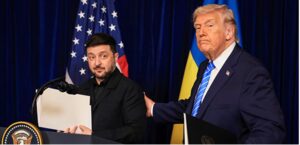
THE US-NATO CRISIS AND THE WAR IN UKRAINE
From Les Posadistes – 8.5.2026 The war in Ukraine has triggered crises, confrontations and huge divisions in all the political forces of the right and of the left. In the European bourgeoisies, some press for war escalation and increased military budgets while others believe that a diplomatic solution is still possible. In this situation, the struggle between systems – the capitalist regime versus the so-called socialist regime – is obscured. In this conflict post-disintegration of the USSR, the « Russian-phobic » European lefts do not dialectically evaluate the unequal and combined process of structures of the former Soviet working state in today’s Russia. Even with the end of the USSR, capitalism continues His war, now against Russia, through the military instrument represented by NATO and its 32 member countries. Historical review on the creation of NATO against the USSR On April 4, 1949, NATO was founded with the precise goal of overthrowing the USSR. NATO is the second military organization for the defence of a system in crisis. NATO does not defend the particular interests of any country, except those that share productive and commercial relations based on private property, that is, the capitalist system. The USSR, on the other hand, not only opposed a system based on collective property and economic planning, but left World War II, strengthening and expanding its influence to Eastern European countries; and on October 1º of that same year, China was also incorporated into the socialist world. The relationship between systems, throughout this period, consisted of a war of consolidation of areas of influence. Thus, we will have rail control over European countries; with the installation of military bases in European territory, as in France; with the implementation of the Marshall Plan; and with clandestine structures, such as Operation Gladio, which operated under the control of the CIA. Identical to this corridor in Japan and South Korea. The USSR extended its influence in Africa by supporting the anti-colonial struggle, and in the Middle East this period of « cold war » was also a period of contradictory growth. Technological advances found an outlight in Keynesian policies, with the implementation of economic measures that transcended capitalism and, to a large extent, corresponded to the Working State. Capitalist societies had a period of growth and stability that lasted until the 1980s, and now suffer a period of decay with neoliberal policies. The USSR, even going through a period of partial regeneration, especially in the economy and in relation to the process of world revolution, presented serious degenerative problems evident in the bureaucratic body that directed the Workers’ State (EO). The lack of Marxist preparation in the PPCC of the Working States (EEOO) developed the private interest of caste, which determined the fall of the EEOO of Eastern Europe under the influence of imperialism and, ultimately, the dissolution of the USSR. The USSR itself, in the period after its dissolution, was invaded by advisors sent by Yankee imperialism and the IMF, who reorganized government apparatuses on capitalist bases. In the specific case of Ukraine, the corrupt bureaucracy made concessions to imperialism that had restructured the army, from the 90s, and that had organized colourful revolutions to end what was left of the EO. For this, imperialism counted on the incorporation of the Soviet republics of the Baltic, with the triumphant coloured revolution of Georgia, with several other colourful revolutions and with the final proof that it was the war against Yugoslavia. Ukraine The bloody insurrection of Maidan Square in late 2013 was carried out by marginal sectors organized in Nazi battalions and armed by imperialism, along with Georgian snipers, whose coronation began in 2014 with the expulsion of Ianucovich and the installation of the government designated by the United States in the person of Victoria Nuland. Such a conspiracy revealed itself after the filtration of Nuland’s telephone communications with the US embassy in Ukraine. Nuland was very pleased with the appointment of Yaseniuk, « our man », as prime minister, and Klishco as administrator of Kiev. What about the Europeans? « May they be unlucky! ». The time had come to settle accounts with socialism. The military campaign against Russia had to be based on provocations; the incorporation into NATO of Sweden and Finland, countries bordering Russia; economic sanctions of all kinds, exclusion of Russia from Olympic and football championships; criminal aggression against the Russian populations of Donbass, finally, a direct war action, to blow up the Nord Stream gas pipeline, which supplied gas in abundance and at a good price to Germany and Europe. In the first phase of the war, which took place from 2014 to 2022, Russia maintained an observer position, seeking diplomatic channels to reduce the conflict. The search for diplomatic agreements between Russia and NATO revealed that NATO sought to humiliate Russia. In the failed peace negotiations of December 2021, Stoltenberg, his secretary general, publicly declared: « Russia wanted less NATO and we gave it more NATO. » In February 2022, the Ukrainian Nazis intensified the bombing against the populations of Donbass. In those days, after a meeting of the Russian government with all the ministers and the participation of the high commanders of the army, broadcast live on Russian television, it was decided that, at that moment, it was necessary to intervene militarily with a « Special Operation ». The first steps of the operation aimed to exert military pressure so that the Ukrainian government was forced to sit at the negotiating table. The Russian army even occupied the outskirts of Kiev, in the town of Bucha, and in the face of the acceptance of the Ukrainian government to deal with it, the Russian army withdrew from the town of Bucha without firing a single shot. Then, the Nazis filled the locality with corpses blaming the Russian army, but the Ukrainian government refused to ask questions about the fact. Negotiations between the Russian and Ukrainian delegations took place in the locality of Gomel, Belarus, and when it seemed that everything was settled, the contract was destroyed by the Ukrainian government. The military
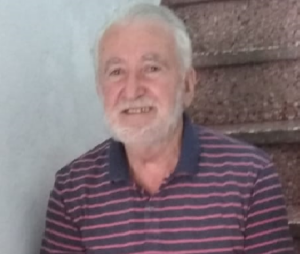
GOODBYE COMRADE PEDRO ALONSO!
Our dear Argentine comrade, Pedro Alonso (Mário), passed away about four days ago. His ashes will be taken, according to his wish, to Venezuela, a country where he helped organize in the 80s, a team of militant defenders of the Trotkista-Marxist ideas of J. Posadas (PORT) to help with the rise of Hugo Chávez’s Bolivarian revolution. With his militancy in the PORT, and within Peronism as a worker-union activist in the refrigerators of the meat industry, Pedro contributed, to the publications in the Trotskyist paper, VPs (Voz Proletária), that had been created by J. Posadas. What remains of his recent years, having returned to Argentina, is the living and enduring memory of his enthusiasm and dedication to writing and defending Hugo Chávez’s Bolivarian Revolution – continued by Nicolás Maduro. Pedro wrote extensively as a well-informed columnist and analyst for the Aporrea website (Venezuela), and we have reproduced his articles on PosadistasHoje.com.br, in the section « Debate of Ideas ». Pedro, we than you. Today, we thank you for the contribution of ideas and the enormous legacy you left us. Pedro Alonso, rest in peace! See you always! We will win! Buenos Aires (Argentina) October 5, 2025 Some of his articles reproduced on www.posadistashoje.com.br: https://posadistashoje.com.br/america-latina/outra-vitoria-contundente-o-plano-golpista-foi-defeated/ https://posadistashoje.com.br/america-latina/a-institutionality-da-venezuel-e-solida-e-democratica/ https://posadistashoje.com.br/america-latina/venezuela-inabilitar-corrupt-e-golpistas/ https://posadistashoje.com.br/america-latina/o-chavismo-que-vem/
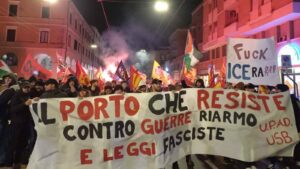
THE ANTI-WAR STRUGGLE REQUIRES THE PROLETARIAN MOBILIZATION OF ALL ANTI-WAR AND ANTI-IMPERIALIST MOVEMENTS
We publish below the Posadists’ statement published for the International Conference against War that took place in London on June 20, 2026. On behalf of the Posadists, we welcome this important international anti-war conference in London on June 20, 2026. With this document we wish to contribute to the debate and the proposal by the organizers to create an « Organized International Network for Peace, opposed to the American Imperial Project, and fighting for the livelihoods, even the lives themselves, of workers ». We welcome the trade union delegations of many countries of the European Union, as well as the dockers of Genoa and elsewhere. We welcome the opportunity to meet students who have organized major demonstrations against compulsory military service in Germany and several other European Union countries. The International Network will only defend peace by fighting alongside the anti-imperialistsThis International Conference against War offers a great opportunity to develop scientific ideas capable of unifying the human feeling that rejects war, with the awareness of the need to oppose the source itself, namely the capitalist system. Even with their limits, it is not the workers’ states (especially Russia, China, North Korea and Cuba) that are stiring up wars. They defend themselves against the increasingly genocidal war that global imperialism – across the United States, Israel and all NATO members and partners – is leading against them. For example, it is not Russia that attacks Ukraine, but the United States, Israel and NATO, in order to attack Russia through Ukraine. With immense global campaigns of lies to demonize Russia and its allies, global imperialism actively seeks to exacerbate the differences between anti-war movements that are more or less inclined to defend workers’ states and revolutionary states. For the formation of a solid International Network capable of influencing the working class and its allies, it is essential that historical facts be highlighted in order to identify the capitalist system as the source of all war. American imperialism, led by Donald Trump and in alliance with the genocidal Netanyahu, launched a new war against Iran, causing hundreds of civilian deaths, including 148 girls from a primary school in the city of Minab, and assassinated Supreme Leader Ali Khamenei as well as senior government officials, army command and Revolutionary Guards. With this war and the closure of the Strait of Hormuz, imperialism tried to subdue Iran and, at the same time, to control the entire region, its natural resources and its oil, in order to undermine the development of China, which is calling into question its control of the world economy and is one of its main enemies, just like Russia. After months of economic and military blockade, years of sanctions, as well as the seizure and destruction of fishing boats under the pretext of drug trafficking, the Trump administration launched the kidnapping of the President of the Bolivarian Republic of Venezuela, Nicolás Maduro, and the First Lady, MP Cilia Flores. This action constitutes an act of military interference and a coup against a sovereign country, resulting in the death of Cuban and Venezuelan soldiers from the president’s personal custody, who gave their lives to prevent kidnapping and invasion. This military attack is based on a disinformation campaign based on unproven accusations of the Venezuelan government’s involvement in drug trafficking. The objective of the invasion project was to bring about a change of government that would facilitate the control, extraction and use of Venezuela’s huge oil reserves and other strategic natural resources. The vast majority of the world is witnessing the delusional race of all NATO member and associated states, which plan to devastate countries and exterminate populations to maintain their imperialist hegemony. Ordinary citizens are outraged and furious at the Israeli genocide in Palestine and beyond, as well as the impunity with which it continues. They denounce the leading role played by our own Western governments in this genocide. They protest against the illegal act of the British state that arrested about 3,180 supporters of Action Palestine under cowardly laws that turn peaceful people into criminal terrorists, depriving them of their rights. Mobilization in Genoa, Italy in support of Palestine on September 1, 2025 In many countries, the organization « Syndicalists for Palestine » coordinates workers’ mobilization campaigns to demand respect for the ceasefire in Palestine, support the boycott of illegal settlements and suspend the arms trade. This conference offers the opportunity to further integrate anti-war campaigns into the unions to force—for example—the TUC (England), the STUC (Scotland) and the Irish Congress to implement their decisions in favour of the Palestinians and the international BDS movement (boycott, disinvestment, sanctions). In Cuba, the United States described what they call « the Cuban communist government » as a « threat to American national security ». The Trump administration openly describes its blockade and sanctions as « instruments to overthrow the communist regime and promote a democratic transition in Cuba ». The war waged by the United States and Israel against Iran is part of the third world war that world imperialism has already initiated, with the aim of preserving its domination, by subjugating, killing, letting millions of people die around the world. The world’s forefront of the current anti-imperialist struggle resides in Palestine, Lebanon, Iran, Yemen, Venezuela, Cuba, North Korea, Russia and China, as well as in countries fighting imperialism in Africa, Latin America, Vietnam and elsewhere. Capitalism invents any lie to accuse Russia of wanting to invade Poland, the Baltic States, Europe and the United Kingdom. To believe this is to ignore that Russia’s global role has nothing to do with the usurious, exploiting and murderous role of imperialism. Far from being imperialist, Russia supports anti-imperialist struggles. She confronts NATO and global capitalism in Ukraine. On June 4, the International Economic Forum in St. Petersburg presented proposals for 55 bilateral cooperation projects between Russia and Cuba, totalling about $4 billion. Russia’s interests push it to care about people. This is not the characteristic of imperialism. It is incorrect to place Russia in the same category as imperialist countries – the United